
By Aviation Recruiting | For charter operators, flight departments, and aviation professionals
Every charter operator knows the feeling. The phone starts ringing in November, the schedule fills up in December, and by the week after Christmas, every available crew member is flying, on call, or resting so they can fly tomorrow.
This year, many operators are heading into that stretch with less slack than ever. New industry data shows business aviation is flying more, crew rosters are tighter, and the competition for pilots is picking up again.
The holiday rush is about ten weeks away. Here’s what the numbers say, and what to do about it now.
1. The busiest summer on record, and fall hasn’t let up
According to WINGX data reported by GlobalAir.com, business jets flew nearly 947,000 departures worldwide between June 1 and August 23, up 2.3% from summer 2025 and 35% above the same period in 2019. It was the busiest summer in WINGX’s records, and North America accounted for more than 71% of global business jet activity.
The fall has stayed steady. Argus reported that North American business aviation activity rose 0.9% in September, beating its own forecast, with large-cabin fractional flying up 13.9%.
What it means: Demand isn’t easing heading into the busiest weeks of the year. Operators that were short a crew or two in July will feel it much more in late December.
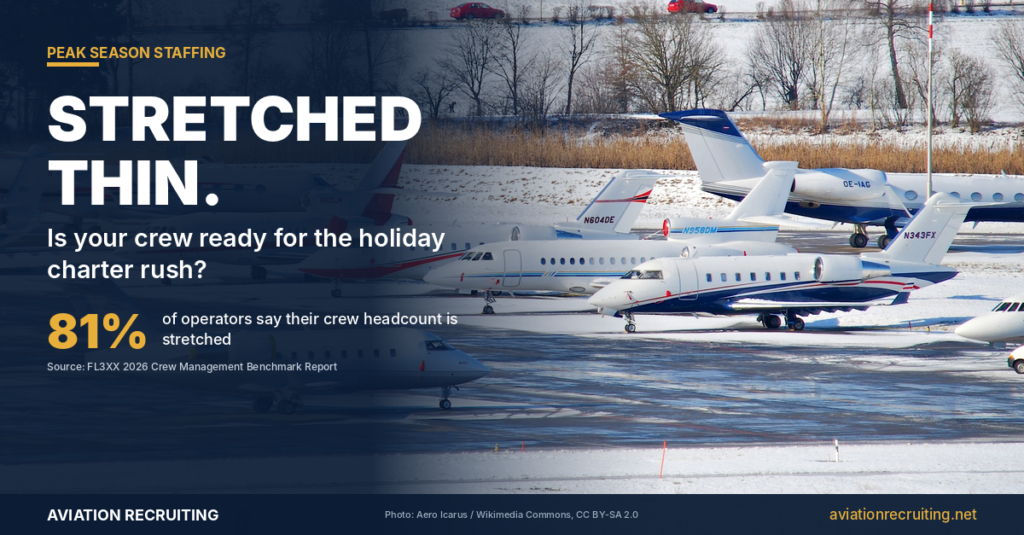
2. 81% of operators say their crews are stretched
A September 2026 crew management benchmark report from FL3XX, built with SkAI Tech, put numbers on what many directors of operations already know:
- 81% of operators say their crew headcount is stretched. They can cover the planned schedule, but have little slack for sick calls, AOG aircraft, or short-notice trips.
- 88% spend significant time reacting to urgent problems rather than planning ahead.
- Only 15% describe their rostering process as highly confident.
- Three in four operators rely on freelance or contract crew.
- Half still manage crew days off and scheduling preferences by phone, text, or email.
What it means: A roster that “works on paper” breaks the first time someone gets sick on December 27. Peak season exposes thin staffing faster than any other time of year.
3. Duty and rest limits don’t flex for the holidays
Demand can spike overnight. Crew limits can’t.
Under 14 CFR 135.267, a two-pilot crew flying unscheduled Part 135 operations is limited to 10 hours of flight time in a 24-hour period, and each assignment must include at least 10 consecutive hours of rest. Pilots are also capped at 500 flight hours per calendar quarter and 1,400 per year.
Those limits are there for good reason. But they also mean the only way to fly more trips safely is to have more qualified people available to fly them.
What it means: When the trip requests stack up, a shallow roster turns into turned-down revenue, or worse, pressure on crews who are already tired. Building depth before the rush is a safety decision as much as a business one.
4. The airlines are hiring again
Earlier this year, the airline hiring slowdown made experienced pilots easier for business aviation to find. That window is narrowing.
According to Future and Active Pilot Advisors (FAPA), U.S. major airlines hired 648 pilots in August, more than double May’s total, bringing 2026 hiring to 4,511 through August, already matching all of 2025. ATP Flight School reported in September that airline hiring of its graduates is running nearly 40% ahead of last year.
What it means: The pilots you’re counting on for December may be fielding airline calls in November. Retention conversations belong in October, not after someone gives notice.
5. Contract crews are a bridge, not a plan
Contract pilots and freelance technicians are an important part of business aviation, and peak season is exactly when they earn their keep. But when three out of four operators lean on the same contract pool during the same few weeks, the best contractors book up early.
Contract help works best when it’s planned: vetted in advance, trained and current on your aircraft and procedures, and scheduled before the rush instead of during it.
What it means: If your holiday plan depends on finding a type-rated contract captain the week of Christmas, you don’t have a plan yet.
The 10-week staffing game plan for operators
Now through November 1
- Run the math. Compare last year’s December and early-January trip volume with this year’s crew count, and factor in vacation requests, training events, and medical renewals.
- Fill open seats now. Full-time hires started today can be trained and current before the peak. Hires started in December usually can’t.
- Have the retention conversation. Talk with key pilots and technicians about holiday schedules, bonuses, and time off before the airlines talk to them first.
November
- Lock in contract support. Identify, vet, and schedule contract pilots and technicians for specific dates, and make sure their training and records are complete.
- Cross-train where you can. Schedulers, dispatchers, and line staff who can cover more than one role give you flexibility when the board fills up.
- Get scheduling out of the group text. Clear, documented processes for days off, swaps, and reserve coverage reduce errors when everyone is busy.
December through early January
- Protect rest. Build reserve coverage so no one is pressured to stretch a duty day.
- Plan for maintenance surprises. Holiday AOG events hit harder when your technicians are already maxed out. Know who you can call.
- Debrief in January. Write down what broke, so next year’s peak season starts with a better roster.
What pilots and technicians should know
- Peak season is your leverage. Experienced crew and A&Ps are in demand right now. It’s a good time to talk about schedule, pay, and holiday time off.
- Contract work can open doors. A well-run holiday contract assignment is often how full-time offers start.
- Keep your paperwork ready. Current medical, training records, logbook, and certificates let you say yes quickly when the right opportunity comes up.
- Look past the airlines. Charter, fractional, and corporate flying are busier than ever, and many operators offer the schedule predictability and quality of life candidates are asking for.
The bottom line
Business aviation is flying more than ever, and most operators are doing it with crews that are already stretched. The holiday rush will test every roster. The operators who hire, retain, and plan now will be the ones saying yes to trips in December instead of turning them away.
Need to staff up before peak season, or looking for your next role? Aviation Recruiting connects charter operators and corporate flight departments with experienced pilots, maintenance technicians, and aviation professionals across the country. Contact us today and let’s get your crew ready for the rush.
