If you run a flight department, 2026 has probably felt like a year of writing bigger checks just to stand still. Business aviation compensation climbed an estimated 8% this year, and the cockpit is still the hardest seat to fill. The numbers coming out of this fall’s industry surveys explain why, and they point to what operators should be doing before 2027 budgets lock.
The raise didn’t close the gap
According to an AirComp Calculator analysis released in October, U.S. business aviation pay rose about 8% in 2026, up from 6% in 2025. That is more than double the 3.4% gain across the broader U.S. civilian workforce. At the top of the market, one survey put average total cash compensation for Gulfstream G700 captains near $395,000, with the 90th percentile around $495,000. Location matters too: Northeast salaries typically run 10% to 15% above the national average, and some West Coast markets carry premiums approaching 30%.
Yet pay alone isn’t fixing retention. “If you’re paying at the 50th percentile of what the business aviation market is paying, you’re accepting risk,” AirComp founder Chris Broyhill told AVweb. Aviation Personnel International CEO Sheryl Barden added a caution of her own: “Compensation is clearly top of mind, but a raise isn’t always the answer.”
Pilots are still the pinch point
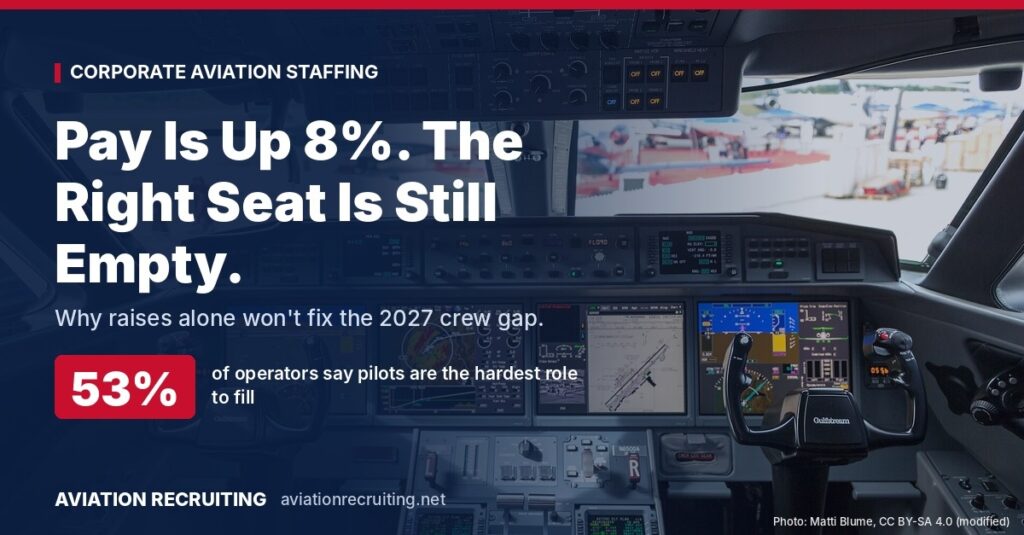
In a poll at NBAA’s National Safety Forum, 53% of business aviation operators said pilots were the role hardest hit by shortages, ahead of maintenance at 35%. A separate Aviation Personnel International survey of Part 91 flight department leaders found 45% ranked compensation and benefits as a top workforce concern, with recruiting qualified people and crew scheduling tied for second at 39% each.
The airlines aren’t easing off, either. United says it will have hired 1,800 pilots by the end of 2026 and plans to keep hiring in 2027. Oliver Wyman estimates a 2026 pilot shortfall of roughly 24,000. Every experienced captain an airline recruits is one fewer available to a corporate or charter operator.
It’s not just the cockpit
The staffing pressure reaches well past the flight deck. The median age of business aviation maintenance technicians is about 54, and the Bureau of Labor Statistics projects 13,100 openings a year for aircraft and avionics technicians through 2035. Boeing’s latest outlook says North America alone will need 122,000 new pilots, 125,000 technicians and 191,000 cabin crew over the next 20 years, with about two-thirds of that demand driven by retirement and attrition rather than growth.
Leadership is the quieter risk. Industry observers warn of “a succession-planning gap” as experienced directors of aviation and chief pilots retire without internal successors ready to step in. Those roles now demand HR, finance, insurance and executive-relations skills on top of operational expertise, which makes them harder to backfill on short notice.
Demand is getting choppier
There’s a twist heading into winter. WingX data shows 74,105 business jet flights worldwide in the week ending October 31, about 2% below the same week last year. The trailing four-week trend slipped about 1%, its first decline of 2026, even though year-to-date flying is still up roughly 3%. Steady annual growth with uneven weeks means staffing for your busiest week can leave you overstaffed, while staffing for your slowest leaves you scrambling.
What smart flight departments are doing now
- Benchmark above the median. If your pay sits at the 50th percentile, assume someone else is already calling your captains. Total rewards (retirement, training, per diem and retention bonuses) count as much as base salary.
- Sell the schedule. In the API survey, 54% of leaders said schedule predictability and time off matter for retention, second only to pay and benefits. Predictability is one of the few advantages business aviation can still offer over the airlines.
- Build the bench before you need it. Identify who could step into chief pilot or director of aviation roles in the next three to five years, and start developing them now.
- Size the core crew for steady demand. Keep a permanent team built for your predictable flying, and use qualified contract crew for peaks, absences and schedule changes.
- Keep a pre-vetted pipeline warm. The cost of a vacancy is lost trips and burned-out crews. Having verified, operationally matched candidates ready shortens time-to-hire when a seat opens.
The bottom line
Raises are table stakes in 2026, not a strategy. The operators who keep their seats filled in 2027 will be the ones who pair competitive pay with predictable schedules, a real succession plan and a recruiting partner who already knows the candidate market.
Aviation Recruiting specializes in placing pilots and flight crew with corporate flight departments, charter operators and private aviation companies. We verify flight time, operational fit and safety-culture alignment before a candidate ever reaches your desk. If you’re planning crew for 2027, let’s talk: aviationrecruiting.net.
