
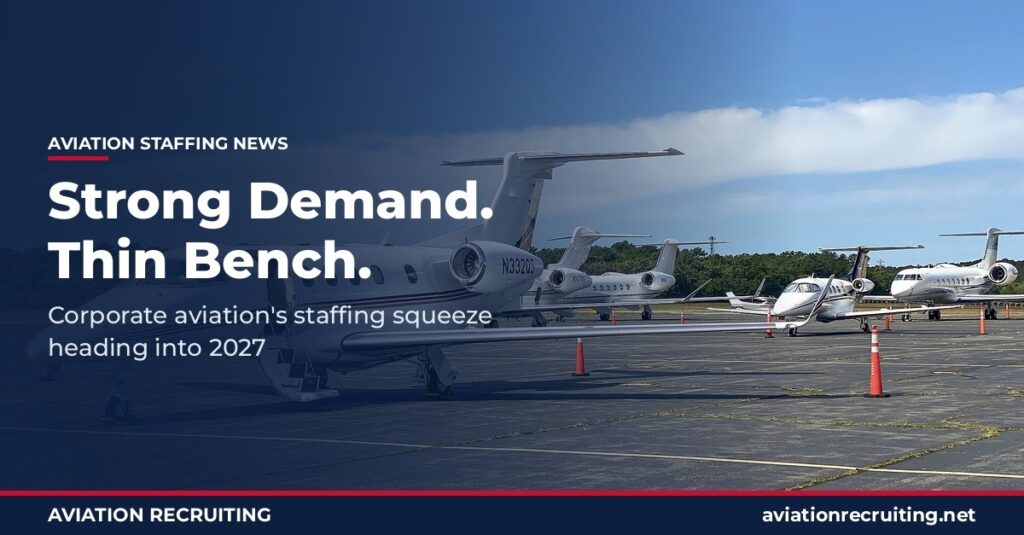
The jets are flying. The question for every corporate flight department heading into 2027 is simple: who will be flying and fixing them?
Three stories from the past few weeks point to the same answer. Demand is holding, the experienced workforce is aging out, and the operators who plan their staffing now will have the strongest crews next year.
The 2045 hiring math is in
On November 18, the Air Transport Action Group (ATAG) released new research projecting that global aviation needs 7.2 million additional workers by 2045. That includes roughly 674,000 pilots and 728,000 maintenance technicians. ATAG’s executive director put it plainly: “aviation’s future still depends on people.”
Those pilot and technician figures match Boeing’s 2026 Pilot and Technician Outlook, which calls for 122,000 new pilots and 125,000 new technicians in North America alone. Boeing says two-thirds of that demand comes from replacing people who retire, not from fleet growth.
Boeing’s forecast covers commercial aviation. Business aviation draws from the same talent pool, and when airlines hire hard, corporate flight departments feel it first.
Demand isn’t the problem. People and parts are.
At Corporate Jet Investor Miami this week, Part 135 operator Hopscotch Air pointed to a “nationwide pilot shortage” while noting it has made progress on hiring. The bigger surprise was maintenance. One of its aircraft had been grounded for three months waiting on service capacity, and a fellow panelist urged operators to “vertically integrate maintenance” quickly.
That’s the hidden side of the staffing story. A missing technician grounds an aircraft just as surely as a missing captain.
Meanwhile, flying continues. WingX data shows global private jet flights running about 3% ahead of last year through early November, with fractional programs called “the bright spot.” The aircraft are in demand. The crews and technicians behind them are the constraint.
Business aviation is going after veterans
At NBAA-BACE in Las Vegas last month, NBAA expanded its Military Connect program to bring veterans face to face with business aviation employers. NBAA noted that operators are seeking pilots, maintenance technicians and operations personnel as experienced staff approach retirement.
The speakers made the case themselves: the chief pilot at Liberty Mutual and the director of maintenance at Netflix are both military veterans. For flight departments, that pipeline is real, and the competition for it is growing.
Five moves for flight departments before 2027
- Map your retirements now. Know who on your team could leave in the next 24 months, and start succession conversations before a resignation letter forces them.
- Staff maintenance like flight crew. Treat your A&Ps and DOM as mission-critical hires. Grounded aircraft cost more than a competitive offer.
- Tap the veteran pipeline. Military pilots and maintainers bring discipline, safety culture and technical depth. Build a transition path that makes your department their first call.
- Shorten your hiring timeline. In a tight market, the best candidates take the first strong offer. A 90-day process loses people a 30-day process lands.
- Vet for fit, not just hours. Verified flight time matters, but so do operational fit and safety culture alignment. A bad hire in a small department is felt by everyone.
How Aviation Recruiting helps
Aviation Recruiting places pilots, maintenance professionals and flight department leaders with corporate, charter and private aviation operators. We verify experience, assess operational fit and keep a pre-built candidate pipeline ready, so you’re not starting from zero when a seat opens.
Planning your 2027 staffing? Let’s talk. Visit aviationrecruiting.net to start the conversation.
