By Aviation Recruiting | For charter operators, flight departments, and aviation professionals
If your pay scale was set a year or two ago, it may already be behind the market.
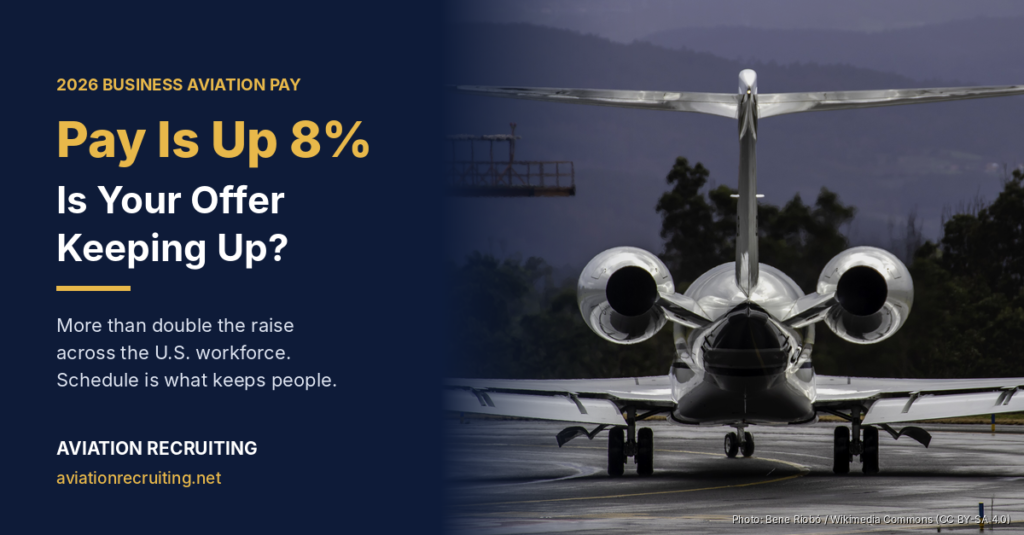
New analysis reported by AVweb this week estimates that U.S. business aviation compensation rose 8% in 2026, up from 6% the year before. That is more than double the 3.4% raise across the U.S. civilian workforce over the 12 months ending in June.
The numbers landed during NBAA-BACE in Las Vegas, where compensation and retention were on the agenda. For charter operators and corporate flight departments, the message is clear: the market is moving, and offers that don’t move with it are losing candidates.
What the latest numbers show
Pay is rising fast. The 8% estimate comes from AirComp Calculator, which combines three industry compensation surveys, including NBAA’s, and adjusts for aircraft type, position, and location.
Where you are matters. Salaries in the Northeast run about 10% to 15% above the national average, and some West Coast markets carry premiums approaching 30%.
Large-cabin pay has climbed sharply. In one survey of long-range operators, Gulfstream G700 captains averaged about $395,000 in total annual cash compensation, with the top 10% near $495,000. The sample was small, but it shows where the top of the market sits.
Pay is now the top workforce worry. In an Aviation Personnel International survey of 75 Part 91 flight department leaders, 45% named compensation and benefits as a top workforce concern. Recruiting and crew scheduling tied for second at 39%.
A note on the numbers: salary surveys measure different groups in different ways, so year-over-year figures vary from source to source. The direction is consistent, though. Business aviation pay is rising faster than pay in most other fields.
Why pay keeps climbing
The people business aviation depends on are leaving faster than new ones arrive.
Boeing’s 2026 outlook projects North America will need 122,000 new pilots and 125,000 new maintenance technicians over the next 20 years, and about two-thirds of that demand comes from retirements and attrition, not new aircraft. Those figures cover commercial aviation, so business aviation’s own needs come on top of them.
The pressure shows up inside flight departments, too. In an NBAA Safety Committee survey released this spring, 53% of respondents said pilot roles were the most affected by workforce shortages, and 41% expected shortages to make safety conditions worse.
When qualified people are scarce, the price of keeping them goes up. Operators who don’t adjust end up paying anyway, through turnover, open seats, and lost flying.
Pay gets attention. Schedule keeps people.
Compensation opens the door, but it isn’t the only thing candidates weigh. In the same Aviation Personnel International survey, 74% of flight department leaders said pay and benefits matter for retention, and 54% pointed to schedule predictability and time off.
That matches what we hear from candidates every week. A strong number gets a pilot or technician to the interview. A predictable schedule, reliable days off, solid benefits, and a culture they trust are what get them to sign and stay.
The cost of getting this wrong is steep. As Sheryl Barden of Aviation Personnel International has put it, “You can pay an extra $25K now—or $700K to replace them later.”
What operators and flight departments should do now
- Benchmark before you post. Compare your ranges against current survey data for your aircraft type, seat, and region, not last year’s numbers.
- Review your current crew first. If new hires will earn more than your experienced people, fix that before you lose the people who already know your operation.
- Be specific about schedule. Spell out rotations, on-call expectations, and time off in the job post and the offer. Clarity is a competitive advantage.
- Look at the whole package. Retention bonuses, retirement contributions, training commitments, and a clear path to captain or lead can close a gap that base pay alone can’t.
- Move quickly. In a market rising this fast, a slow hiring process can turn a fair offer into a below-market one.
What pilots and technicians should do now
- Know your market value. Your aircraft type, seat, region, and experience all affect what you should expect.
- Compare total compensation, not just salary. Bonuses, benefits, retirement, training, and schedule all have real dollar value.
- Ask about the schedule up front. Predictable days off are worth asking about, and worth negotiating for.
- Keep your records ready. Current certificates, medical, training records, and an accurate logbook help you move fast when the right offer comes.
The bottom line
Business aviation pay is rising faster than almost any other part of the workforce, and the forces behind it aren’t going away. Operators who benchmark honestly and lead with schedule and stability will keep winning the best candidates. Those who wait will keep losing them.
Need help building a competitive offer, or wondering what your experience is worth? Aviation Recruiting connects charter operators and corporate flight departments with experienced pilots, technicians, and aviation professionals across the country. Contact us today and let’s talk about your next hire or your next move.
